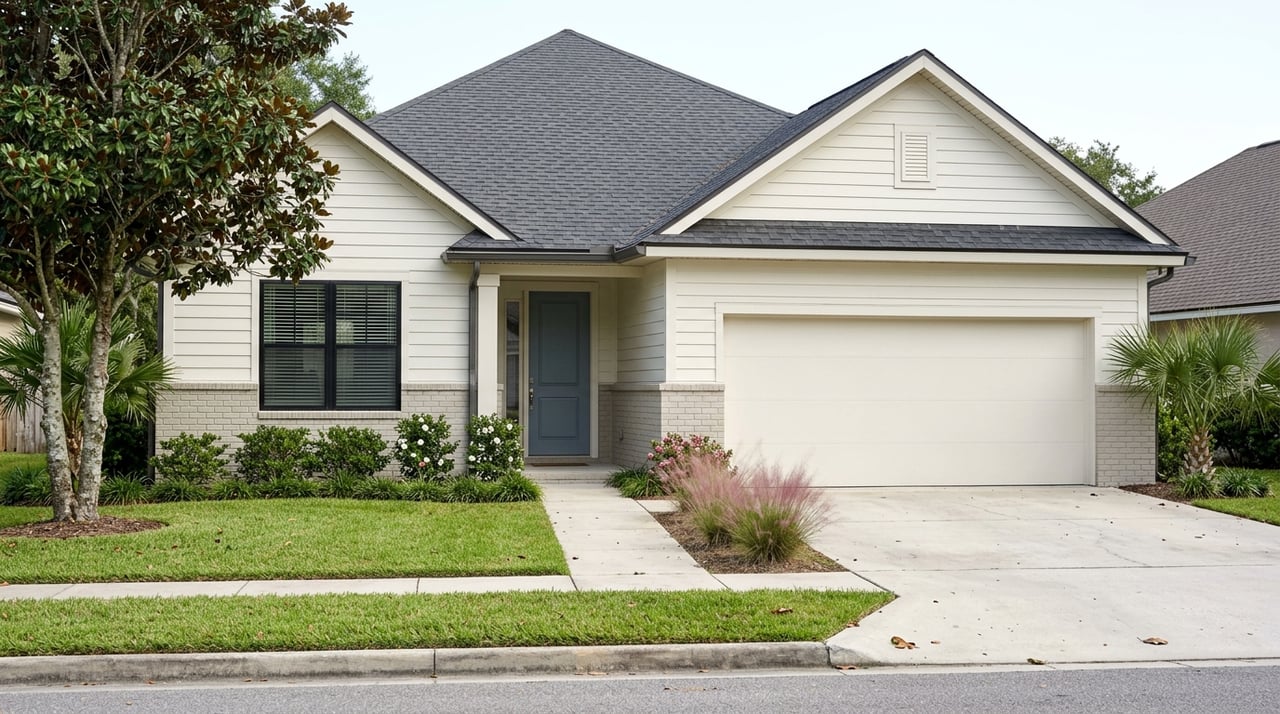
Thinking about moving across the bay and wondering if Spanish Fort is the right fit? You are not alone. For many Mobile Bay buyers, Spanish Fort stands out for its newer neighborhoods, easy I-10 access, and convenient shopping, but it also tends to come with a higher price point. This guide will help you weigh the trade-offs, understand what kind of homes you will actually find, and plan your search with more confidence. Let’s dive in.
Why Spanish Fort Gets Attention
Spanish Fort is a smaller city on the Eastern Shore with 10,049 residents and about 30.50 square miles of land area, based on the 2020 Census. Its location north of I-10 is a big part of its appeal for buyers who want access to Mobile, Baldwin County, and even northwest Florida.
The city also describes itself as a planned-growth community. In practical terms, that matters because the planning department reviews subdivisions and commercial site plans, which helps shape a housing market with many organized neighborhoods instead of scattered infill development.
For some buyers, another notable point is location north of I-10. The city notes that insurance rates often drop for addresses north of the interstate, which can be an important part of your monthly housing budget.
How Spanish Fort Compares Nearby
If you are choosing between Spanish Fort, Daphne, and Mobile, the differences are fairly clear. Spanish Fort is the smallest and most suburban of the three, while Mobile is the most urban and historic, and Daphne sits somewhere in between with a broader established-town feel.
Recent city-level market snapshots put the median sale price around $435,000 in Spanish Fort, compared with about $335,000 in Daphne and $232,000 in Mobile. That means Spanish Fort is currently the priciest of the three based on the latest data in the research.
That price gap does not automatically make Spanish Fort the better or worse choice. It simply means you should expect to pay more if you want its particular mix of planned neighborhoods, larger typical lot sizes, and interstate-centered convenience.
What You Can Expect From Homes
One of the biggest surprises for relocation buyers is that Spanish Fort is not just one type of housing market. Yes, it has many newer and amenity-rich subdivisions, but it also includes older estate pockets, wooded homesites, lakefront settings, and premium view properties.
Community profiles show this range clearly. Stonebridge is described as a master-planned community with resort-style amenities and wooded lots, Rayne Plantation includes lakes, clubhouses, pools, and tree-lined streets, and Osprey Ridge is a smaller 51-lot community on 23 acres.
At the same time, current listings show a wider spread than many buyers expect. Inventory has included established neighborhood lots around 0.34 to 0.48 acres, larger parcels around 0.64 and 1.05 acres, a 1.66-acre lakefront lot, a 3.3-acre wooded estate in Audubon, and even bay-view homes with elevated views.
Lot Sizes Are Often Larger
If yard size matters to you, Spanish Fort may stand out. Homes.com market guides list a median lot size of 17,424 square feet in Spanish Fort, compared with 10,890 square feet in Daphne.
The average single-family home size also runs larger in Spanish Fort. The same guides list an average of 2,420 square feet in Spanish Fort versus 1,972 square feet in Daphne.
Of course, averages do not tell the whole story. The real takeaway is that Spanish Fort gives you a broader mix, from more compact subdivision lots to larger wooded parcels and estate-style properties.
Why Buyers Pay More Here
For many relocation buyers, the value equation comes down to convenience and housing style. Spanish Fort tends to attract buyers who want newer planned subdivisions, easier interstate access, and shopping and dining concentrated near I-10 and Highway 181.
Retail is a real part of the lifestyle here. Eastern Shore Centre reports more than 560,000 square feet of retail and restaurant space, and nearby commercial centers cluster around major roads, making errands and dining more convenient for many households.
That convenience, along with organized neighborhood development and larger typical homesites, helps explain why Spanish Fort often commands a price premium over Daphne and Mobile. Whether it is worth it depends on what matters most in your day-to-day life.
Spanish Fort vs. Daphne
If you are torn between Spanish Fort and Daphne, think about how you want your home search to feel. Spanish Fort is often a better fit if you prefer newer subdivision-driven options, neighborhood amenities, and quick access to I-10 and Highway 181.
Daphne offers a different mix. Local tourism information highlights parks, bayfront access points, fishing piers, and a strong recreation scene, while market guides point to smaller typical lots and a lower recent median sale price than Spanish Fort.
That means Daphne may appeal more if you want a broader mix of established-town character and bay-oriented recreation. Spanish Fort may appeal more if you want a more suburban, planned-growth setting with larger typical lot sizes.
Spanish Fort vs. Mobile
The choice between Spanish Fort and Mobile is usually about lifestyle more than distance. Mobile is the more urban option, with downtown and midtown containing seven National Register historic districts and a housing mix that leans older and more city-centered.
If you want a denser street grid, historic character, and more urban living patterns, Mobile may feel like a better match. If you want a suburban layout with organized neighborhoods and easy access to Eastern Shore retail nodes, Spanish Fort may feel more comfortable.
Price also plays a role here. With recent median sale prices much lower in Mobile than Spanish Fort, some buyers decide they would rather stretch less on budget and get a different style of location and housing stock.
What Commutes Really Feel Like
For many buyers, the biggest question is simple: will crossing the bay be manageable? In most cases, Spanish Fort works well for people whose routines are tied closely to the I-10 corridor.
The city highlights I-10 access as one of its major advantages. At the same time, the Mobile River Bridge and Bayway corridor remains the key variable, and major long-term corridor upgrades are still part of the broader transportation picture.
In plain language, commute time is not just about mileage. It is about how often you need to depend on the bridge and Bayway at peak times, and whether your destination is directly along I-10 or farther off the main corridor.
How To Tour Spanish Fort Efficiently
If you are relocating from out of town, your first visit can feel overwhelming. A smart approach is to group showings by corridor and home type instead of booking homes in random order.
For example, you might spend one block of time touring newer planned neighborhoods near key retail corridors, then another block viewing larger wooded or estate-style properties. That structure makes comparisons easier and helps you decide whether you are drawn more to amenities, land, views, or convenience.
HUD also recommends using a homebuying checklist for each property you tour. That can be especially helpful in Spanish Fort, where one day of showings might include a neighborhood pool community, a lake-oriented property, and a larger wooded lot that all live very differently.
How Remote Buyers Can Compete
If you are buying from outside the area, preparation matters more than speed alone. Buyers who come in organized are usually in a stronger position once the right property appears.
Consumer guidance in the research recommends having a preapproval letter before making an offer, and homebuyer materials cited in the report also note that sellers may receive multiple offers. In practice, that means your best move is to have your preapproval, proof of funds for closing, inspection contacts, and communication plan ready before your showing window begins.
In Spanish Fort, remote buyers should also verify details that can be easy to miss online. Because inventory ranges from subdivision homes to acreage and view properties, it is worth confirming the lot shape, neighboring build-out, and actual view corridor through detailed photos or video before you write an offer.
Is Spanish Fort Worth It?
Spanish Fort can be a very strong choice if you want a suburban Eastern Shore location with larger typical lots, a strong selection of planned neighborhoods, and practical access to I-10. It may be especially appealing if you value a polished neighborhood setting and want nearby shopping and dining built into your routine.
It may be less compelling if your main goal is the lowest entry price, a more urban environment, or a stronger bayfront recreation focus. In that case, Mobile or Daphne may offer a better fit depending on your priorities.
The key is not whether Spanish Fort is objectively better. The key is whether its blend of price, lot size, neighborhood style, and commute pattern lines up with how you actually want to live.
If you want help comparing Spanish Fort with Daphne, Mobile, or other nearby communities, Chrissi Moore can help you narrow your options and build a relocation plan that feels clear and manageable.
FAQs
Is Spanish Fort more expensive than Daphne or Mobile?
- Yes. The research report shows recent median sale prices around $435,000 in Spanish Fort, compared with about $335,000 in Daphne and $232,000 in Mobile.
What kind of homes are common in Spanish Fort?
- Spanish Fort has many planned subdivisions and amenity-focused neighborhoods, but current listings and community profiles also show wooded estates, lakefront lots, and bay-view properties.
Are lot sizes in Spanish Fort larger than Daphne?
- Generally, yes. The research report lists a median lot size of 17,424 square feet in Spanish Fort versus 10,890 square feet in Daphne.
Is Spanish Fort a good choice for Mobile commuters?
- It can be, especially if your daily routine follows the I-10 corridor. The main variable is traffic exposure around the bridge and Bayway during peak times.
Can you buy a home in Spanish Fort from out of town?
- Yes. The strongest approach is to get preapproved early, organize your offer documents before touring, and verify lot and view details carefully through photos or video.
Does Spanish Fort only have new construction neighborhoods?
- No. While the city has a strong planned-subdivision pattern, the market also includes established neighborhoods, wooded parcels, larger estate properties, and some premium view homes.