Chickasaw's entire city limit covers 4.21 square miles of land, according to the U.S. Census Bureau's own figures. That is smaller than some single subdivisions on the Eastern Shore. And yet inside that same small footprint, the town runs a full-season community theater, a free 18-hole disc golf course, a public park that anchors a piece of Alabama's longest paddle trail, and a National Register historic district with its own preservation society running driving tours of the original homes. Most towns spread that kind of civic life across a twenty-minute drive and three different zip codes. Chickasaw keeps almost all of it inside the same grid of streets, which means the hardest part of a weekend here is usually just picking where to start.
The theatre that outlasts the town's size
The Chickasaw Civic Theatre sits at 801 Iroquois Street, an all-volunteer stage that has been staging full seasons for longer than most residents can remember starting it. This year alone it ran "1776 The Musical" in January, timed to the country's Semiquincentennial, followed by the Ken Ludwig comedy "Leading Ladies" in March, and closed its spring run with "Tuck Everlasting: The Musical" from May 14 through May 24. Adult tickets for that run were $18, with seniors, students, and active military at $15, according to a May 2026 report from FOX10. Thursday through Saturday curtain was 7:30 p.m., Sunday matinees at 2:30.
If you caught any of those three shows, you already know the rhythm: local casts, a small house, and a lobby where you probably know half the audience by name. Season tickets for 2026-2027 are on sale now through the theatre's own site, which is the easiest way to lock in a seat before a run sells out to the neighborhood before it ever hits a wider calendar.
Free golf, if your clubs are discs
A few minutes from the theatre, inside Chickasaw Community Park, sits a course locals call The Saw. It is an 18-hole disc golf layout rated Moderate difficulty, and a typical round takes about two hours and covers roughly two miles of walking, according to UDisc's course listing. It carries a 3.6 out of 5 average across more than 400 community reviews, which for a small-town municipal course is a solid mark. There is no fee, no membership, no reservation. Hole one tees off behind the pool, near the swing set, which tells you everything about how this course was built: around the park that was already there, not the other way around.
August in Chickasaw is not subtle about its heat, so the smart play is an early morning or evening round rather than a midday one. The course does not care what time you show up. Your back nine will.
The park at the end of a 631-mile trail
Head north toward US-43 and you hit William Brooks Park, at 601 US-43, where the city charges $4 for boat launching and $2 for shore fishing, funds that go toward the boardwalk system its own Maintenance Department built along Chickasaw Creek, according to the City of Chickasaw's parks page. That boardwalk is not just a nice walk. It marks the endpoint of a two-mile stretch of the Alabama Scenic River Trail, a route the city's own page describes, citing the Department of the Interior, as
"the nation's longest one-state river trail"
stretching roughly 631 miles from the Coosa River all the way to the Gulf of Mexico. Locally this two-mile segment is called the Ron Jones Paddle Trail, named for Mobile County's former Parks and Wildlife Manager. It begins at Chickasabogue Park in Eight Mile and ends right here, at William Brooks Park.
The park doubles as a quiet birding spot. Alabama Birding Trails lists Prothonotary Warbler, Common Yellowthroat, Summer Tanager, and Red-winged Blackbird as regular summer residents, with Osprey and waterfowl visible over the open water from the boardwalk's viewing pavilion. It is the kind of detail most visitors to Mobile never hear about, because it belongs entirely to the people who already live close enough to walk to it.
A driving tour through a town built for shipbuilders
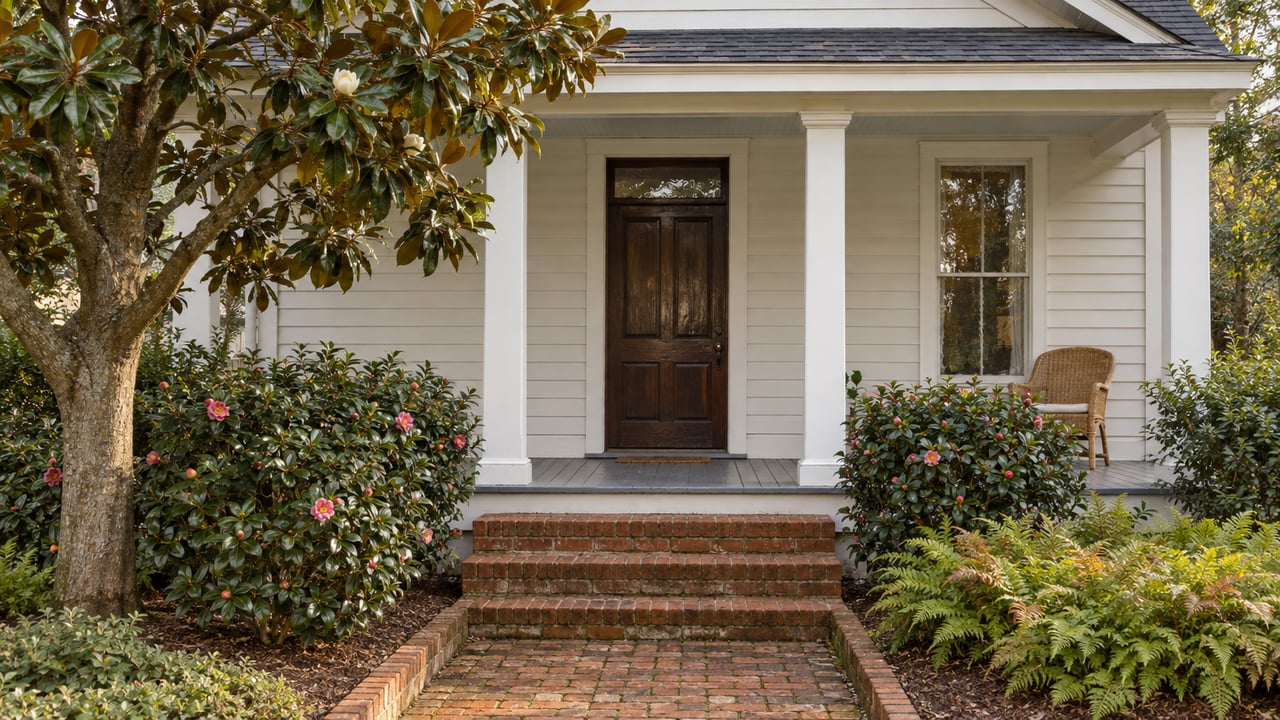
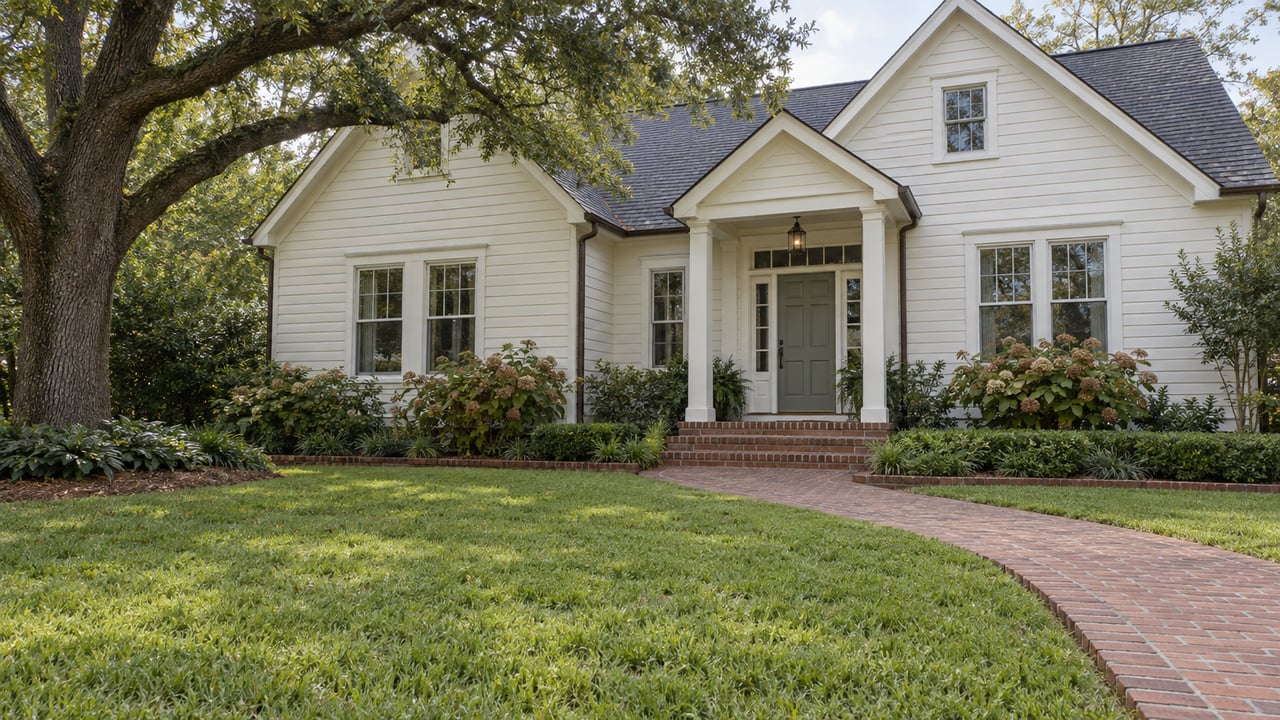
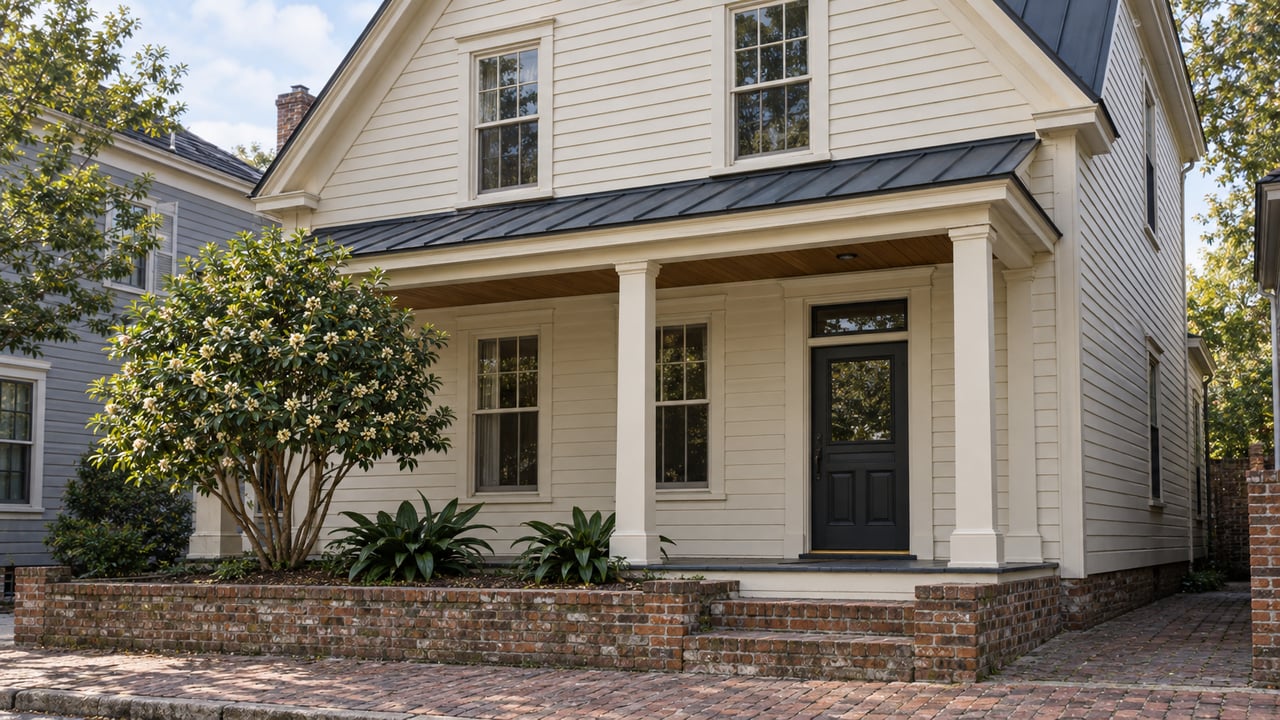
The fourth piece is one most residents drive past without a second look: the Chickasaw Shipyard Village Historic District, added to the National Register of Historic Places on September 3, 2004. The story behind it is stranger than the average historic district. Tennessee Coal and Iron Company, a U.S. Steel subsidiary, bought the land during World War I to build a shipyard and, with it, an entire planned company town for shipyard workers, complete with attractive housing, a school, and a health clinic. Gulf Shipbuilding Corporation took over in 1940 and expanded the village through the wartime defense buildup, according to Wikipedia's history of the district.
One design choice from that era still shapes the neighborhood today: some of the original streets were built as pedestrian-only walkways, which meant vehicle traffic had to use separate back alleys instead. It is a layout you rarely see outside of company towns built from a single blueprint, and it is still there to walk today.
The village also produced one of the more unusual Supreme Court cases in Alabama history. In 1946, Marsh v. Alabama examined whether a privately owned company town could restrict activities, in that case those of Jehovah's Witnesses, within its boundaries. The Court ruled that because the town functioned as a public place, First Amendment protections applied regardless of who held the deed. The town incorporated later that same year, after Leedy Investment Company bought the whole village for one million dollars and gave residents the option to buy the homes they had been renting.
Today the Chickasaw Historic Preservation Society keeps a self-guided driving tour of those original homes, promoted with a billboard on the nearby interstate, according to the Advisory Council on Historic Preservation. It is a slow Sunday afternoon activity, not a rushed one, and it turns familiar streets into something closer to a walk through a specific decade of American labor history.
Four stops, one small grid
Here is the piece that is easy to miss when you experience these one at a time: none of it requires leaving the same four square miles.
| Stop | What it is | Cost | Best time |
|---|---|---|---|
| Chickasaw Civic Theatre | Community stage, 801 Iroquois St | $15-$18 per ticket | Evening curtain, Thu-Sat |
| The Saw at Community Park | Free 18-hole disc golf | Free | Early morning or evening in summer |
| William Brooks Park | Fishing pier, boat launch, paddle trail terminus | $2-$4 | Morning for birds, any time for the walk |
| Shipyard Village Historic District | Self-guided driving tour | Free | Weekend afternoon |
In most Mobile-area towns, a theater season, a disc golf course, a piece of a statewide paddle trail, and a National Register historic district would be four separate errands spread across an afternoon of driving. In Chickasaw they sit close enough together that a resident could reasonably string all four into one Saturday without ever getting on I-65. That is not a coincidence of geography. It is what happens when a town this size holds onto this much civic infrastructure instead of letting any of it go.
If you already call Chickasaw home, you probably know one or two of these well and have never gotten around to the others. That is worth fixing before the summer's out.
If you're weighing a move into Chickasaw or a nearby Mobile Bay community and want a guide who actually knows which street the paddle trail ends on, Chrissi Moore can help you figure out where you'd fit. Call Chrissi today.